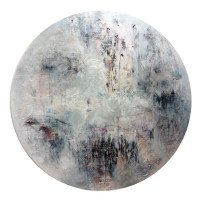
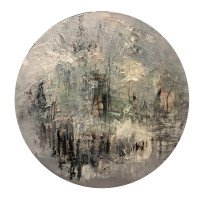
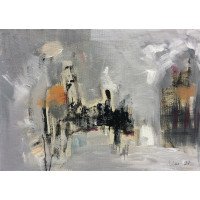
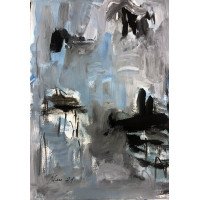
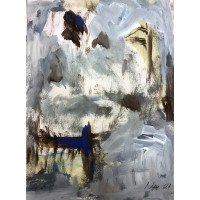
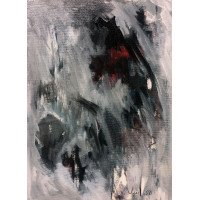
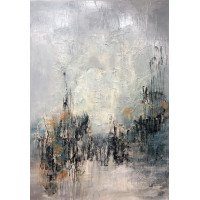
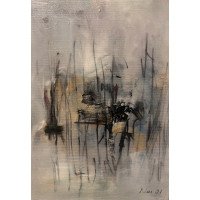
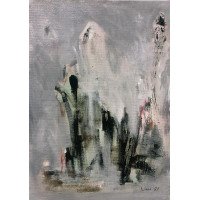
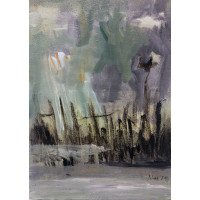
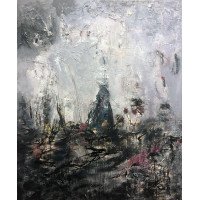
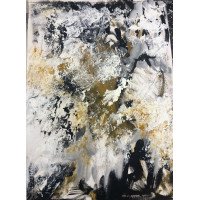
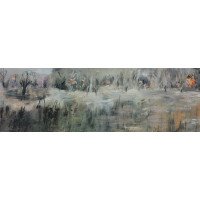
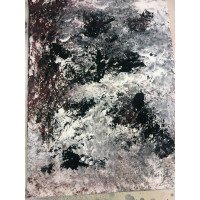
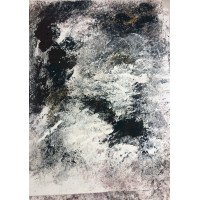
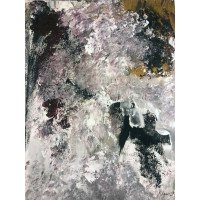
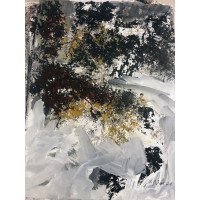
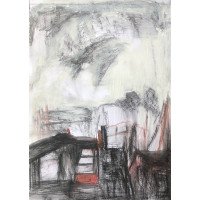
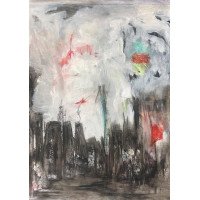
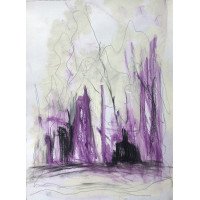
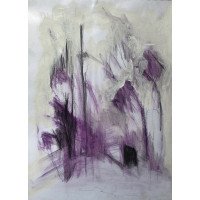
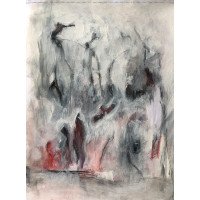
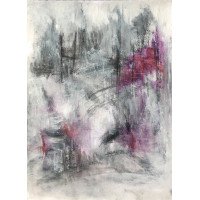
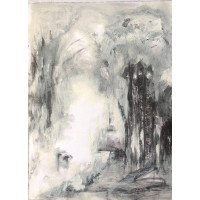
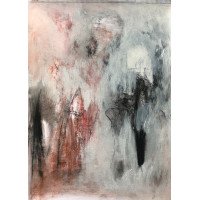
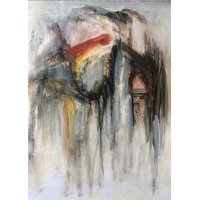
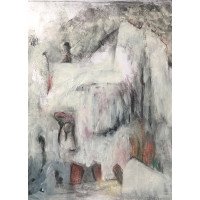
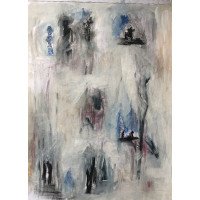
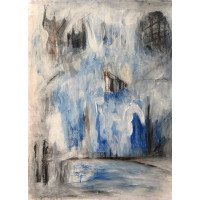
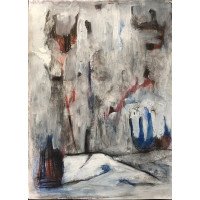
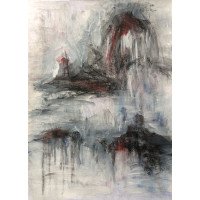
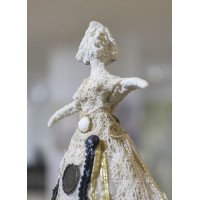
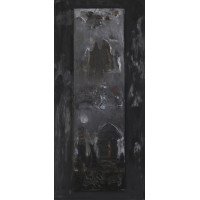
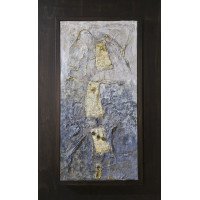
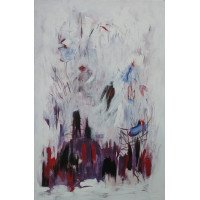
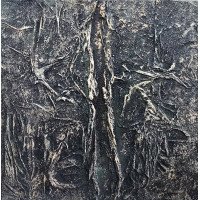
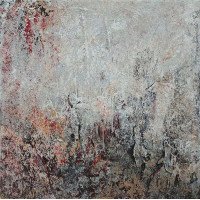
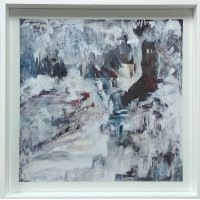
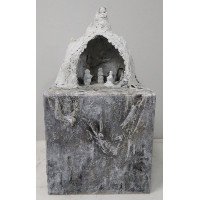
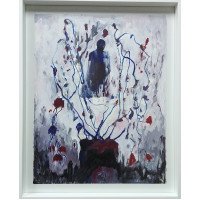
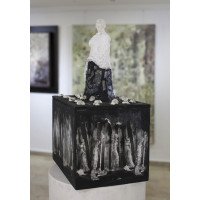
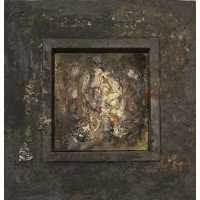
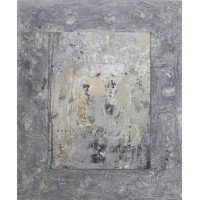
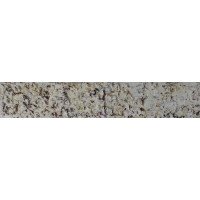
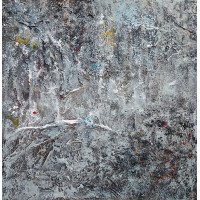
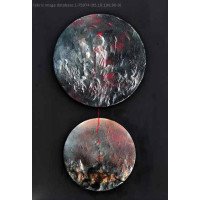
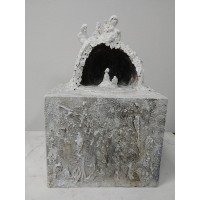
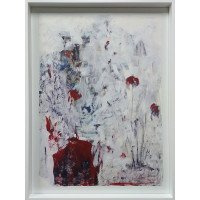
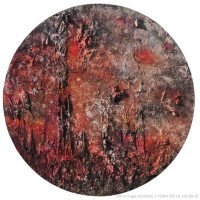
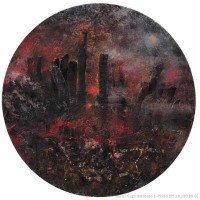
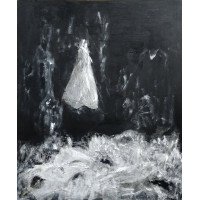
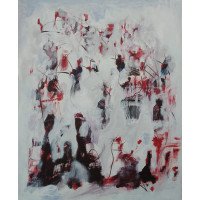
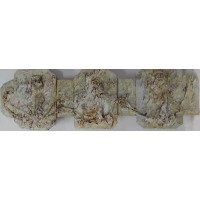
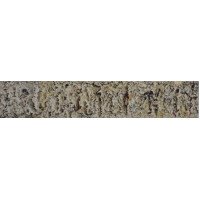
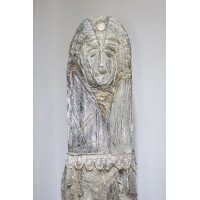
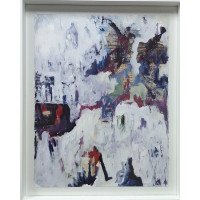
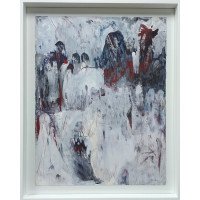
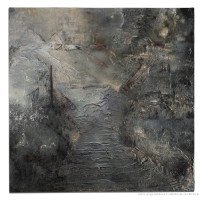
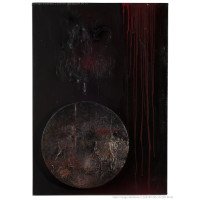
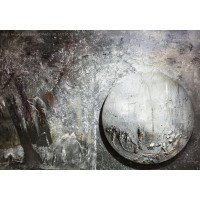
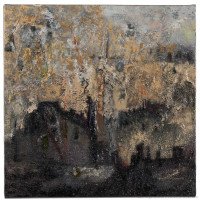
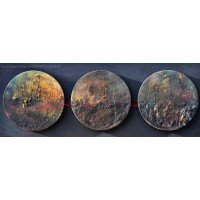
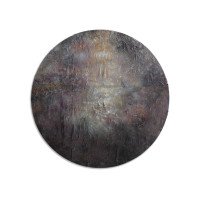
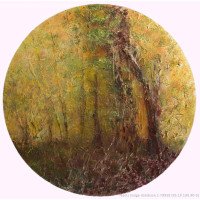
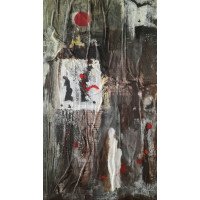
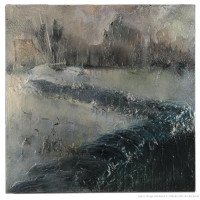
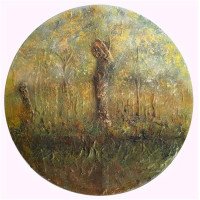
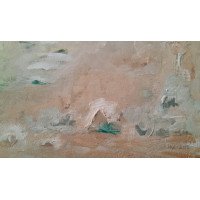
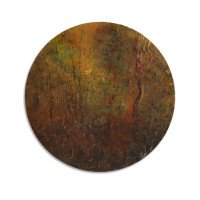
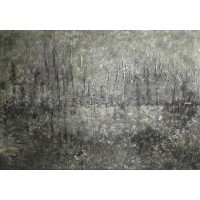
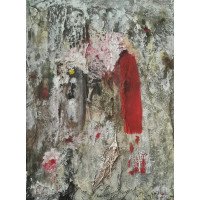
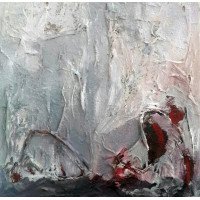
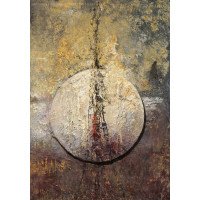
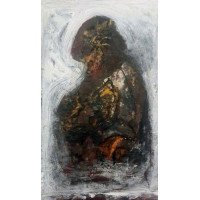
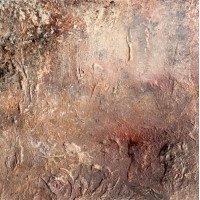
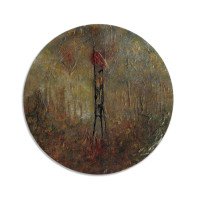
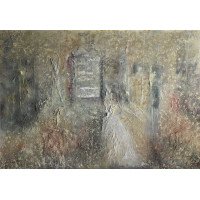
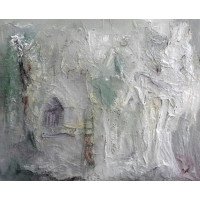
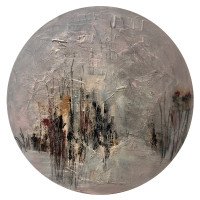
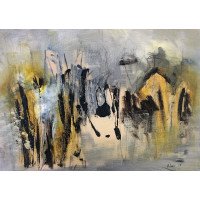
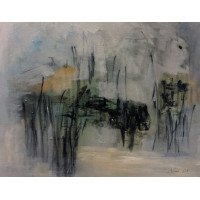
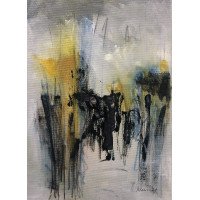
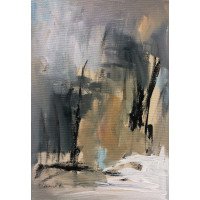
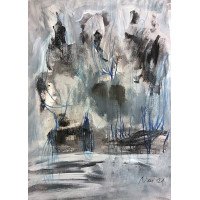
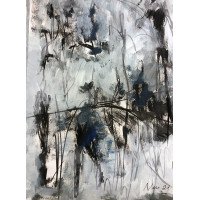
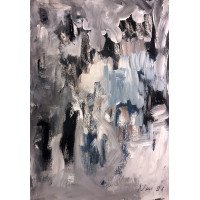
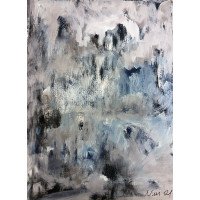
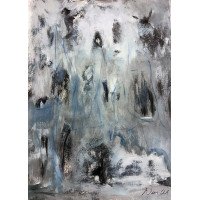
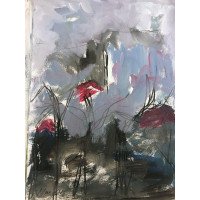
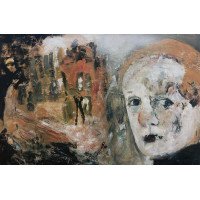
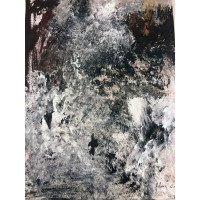
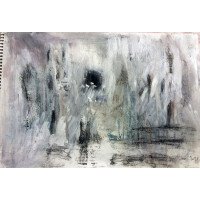
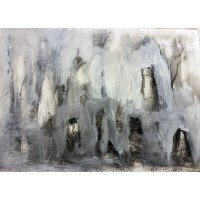
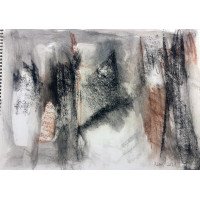
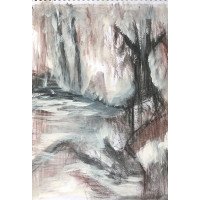
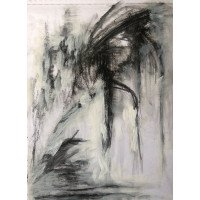
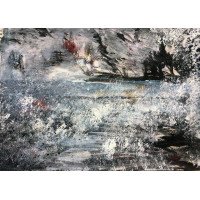
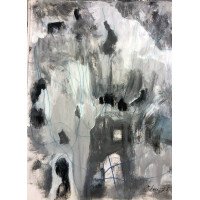
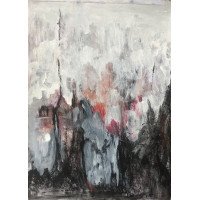
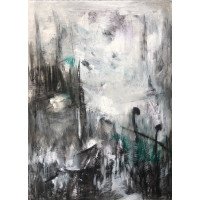
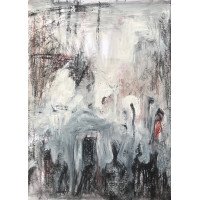
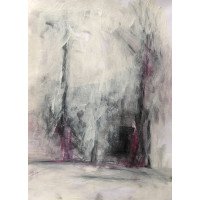
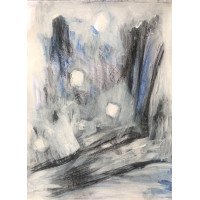
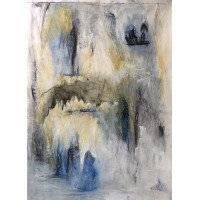
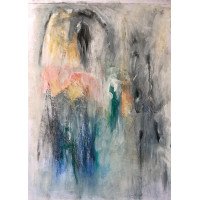
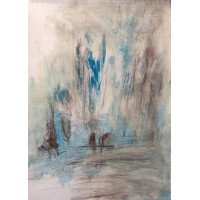
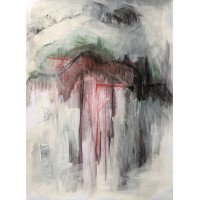
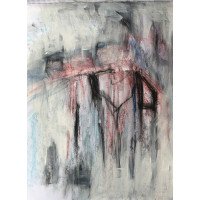
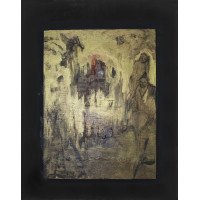
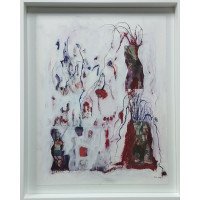
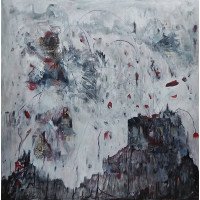
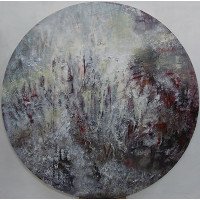
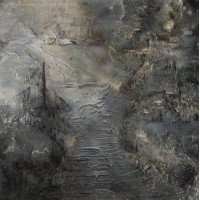
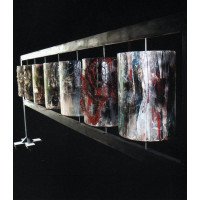
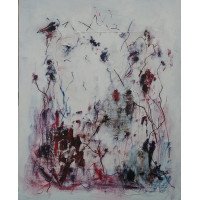
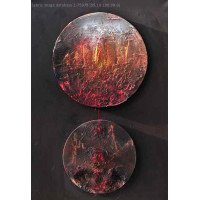
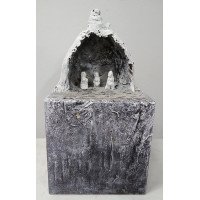
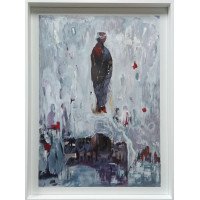
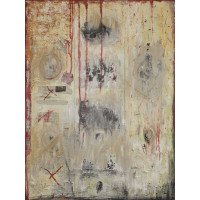
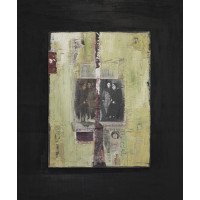
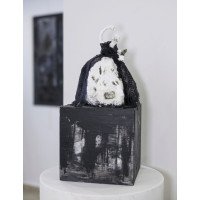
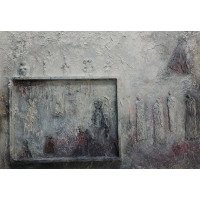
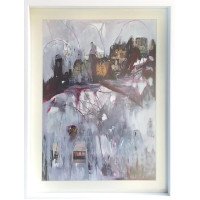
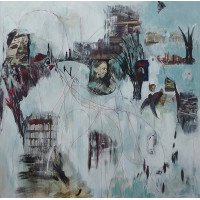
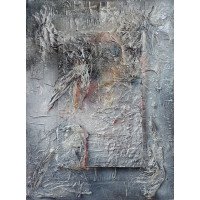
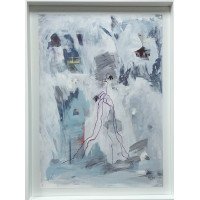
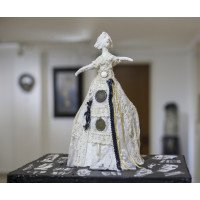
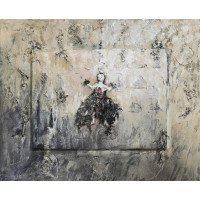
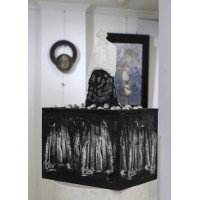
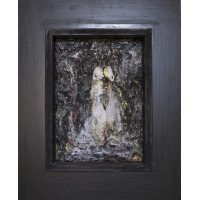
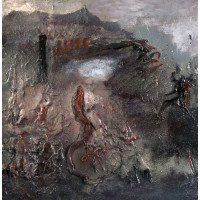
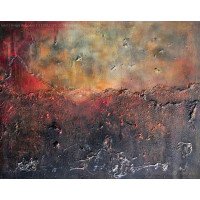
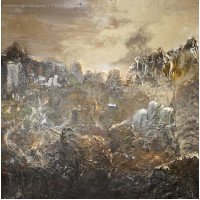
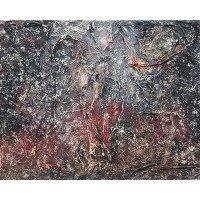
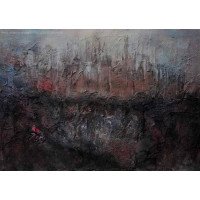
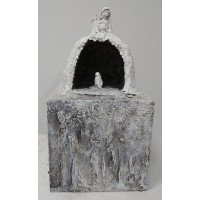
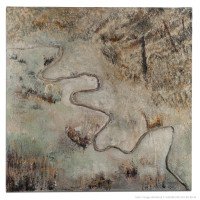
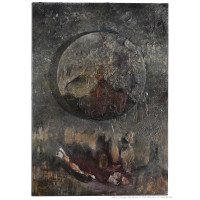
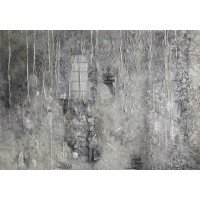
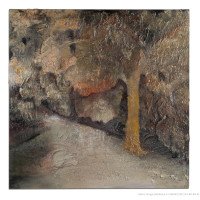
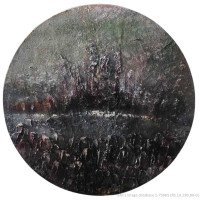
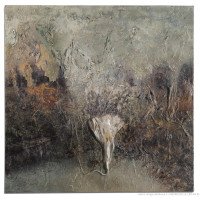
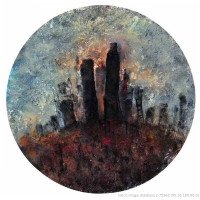
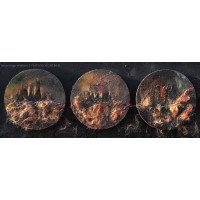
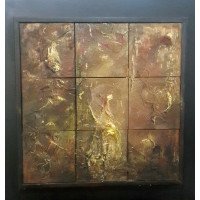
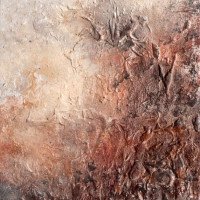
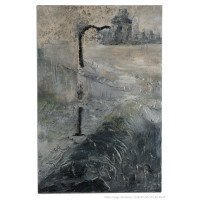
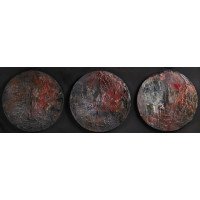
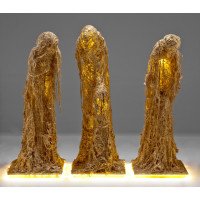
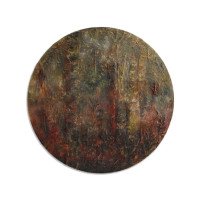
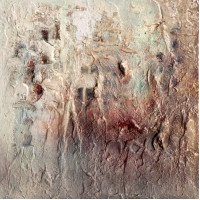
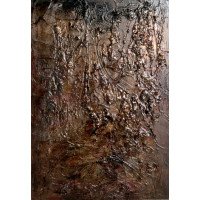
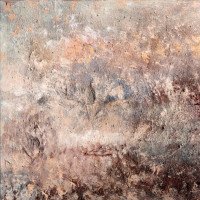
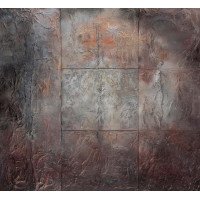
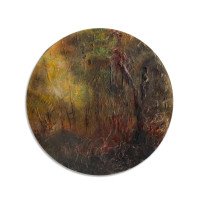
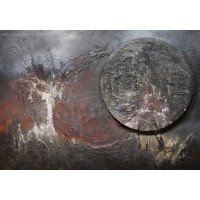
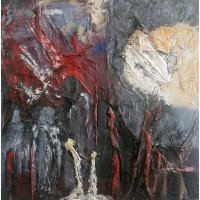
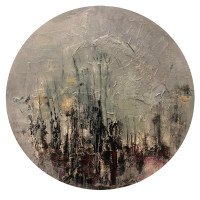
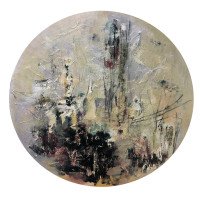
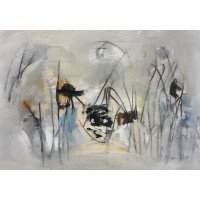
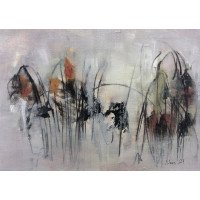
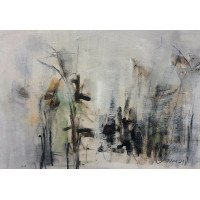
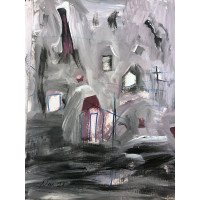
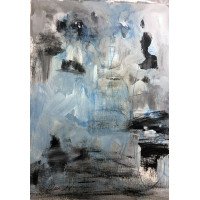
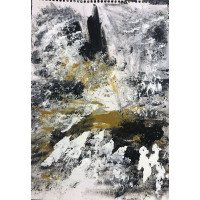
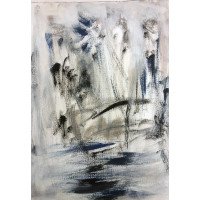
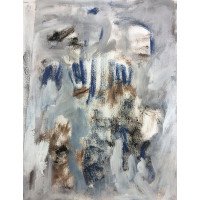
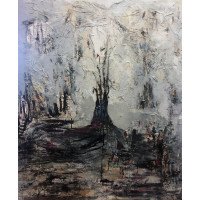
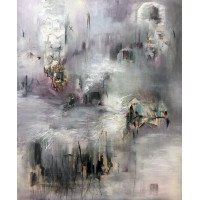
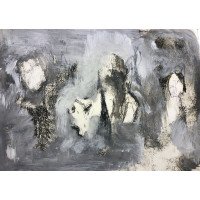
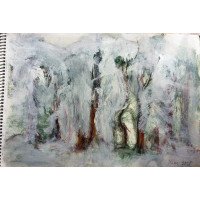
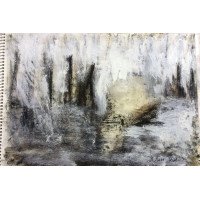
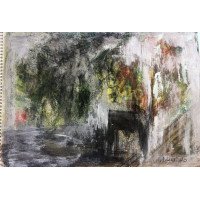
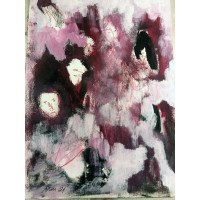
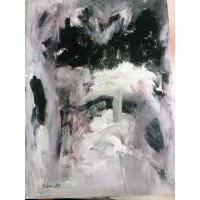
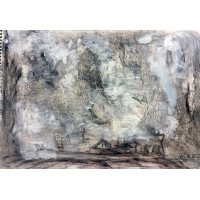
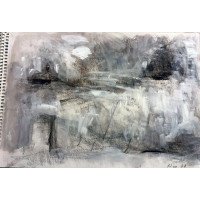
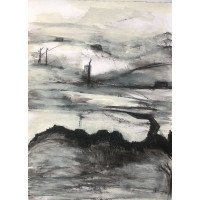
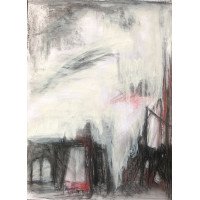
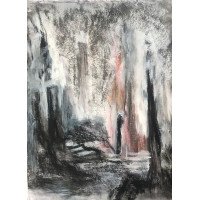
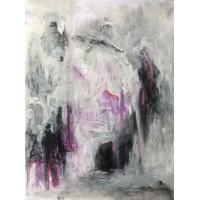
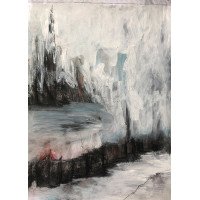
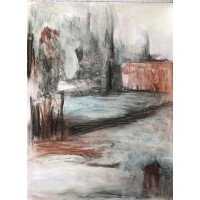
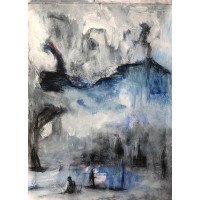
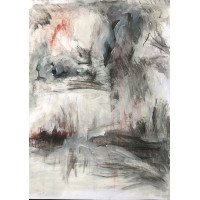
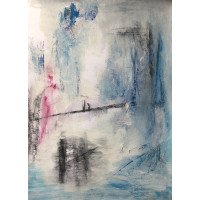
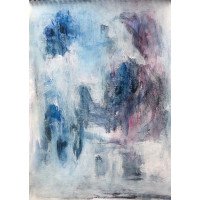
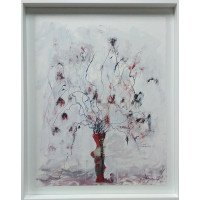
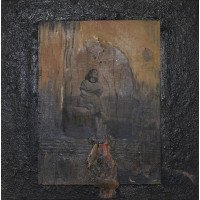
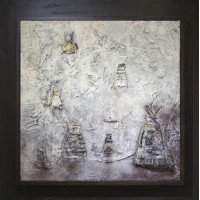
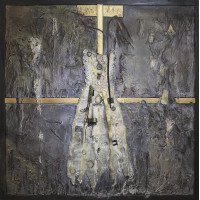
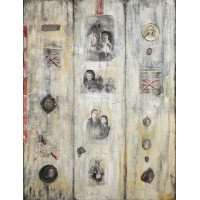
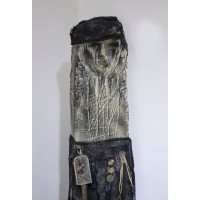
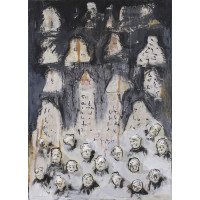
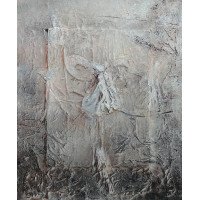
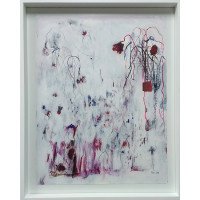
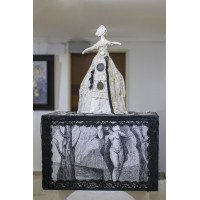
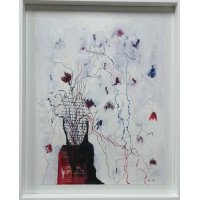
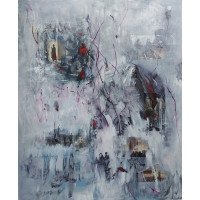
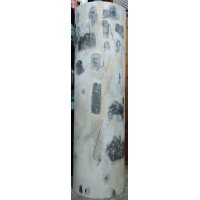
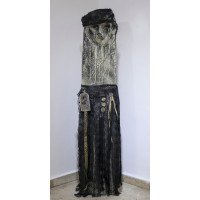
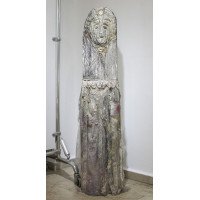
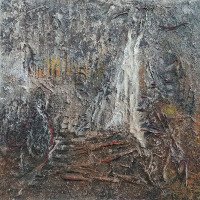
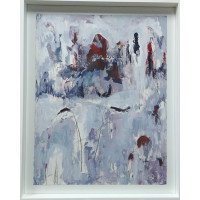
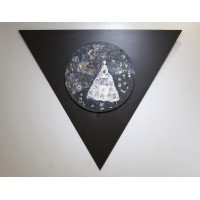
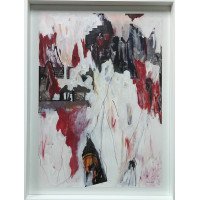
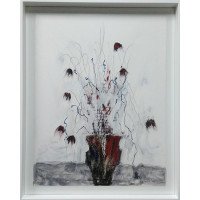
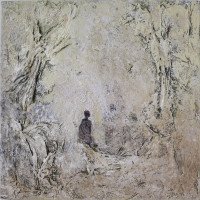
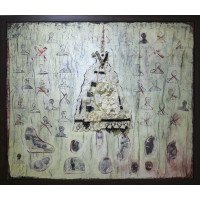
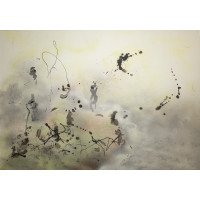
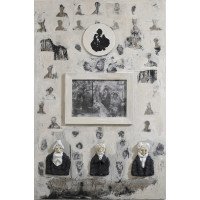
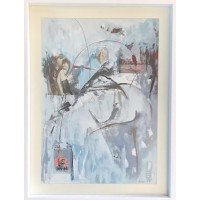
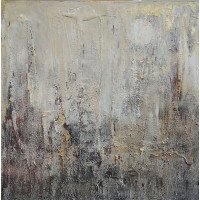
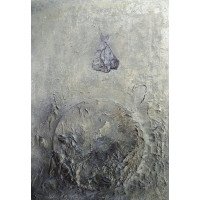
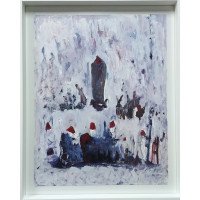
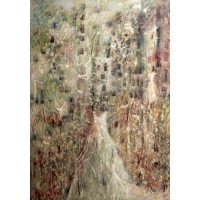
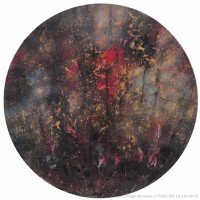
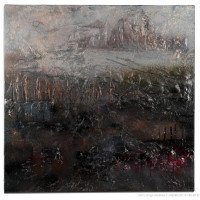
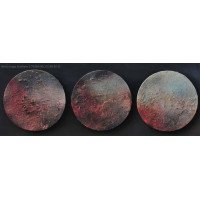
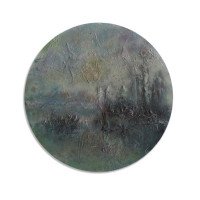
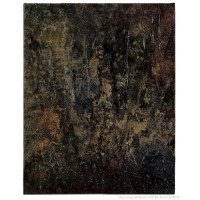
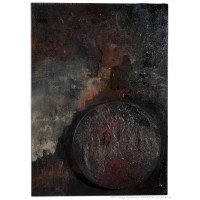
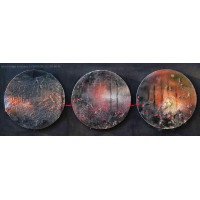
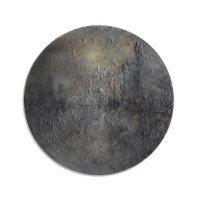
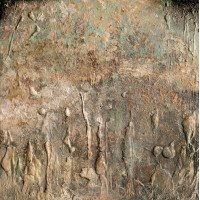
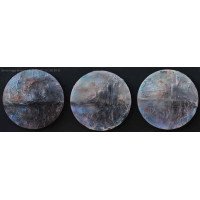
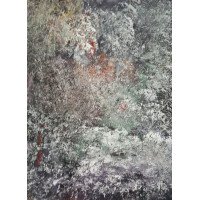
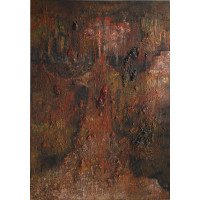
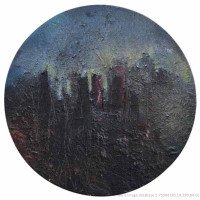
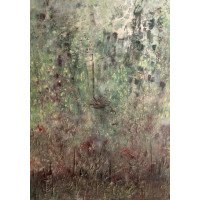
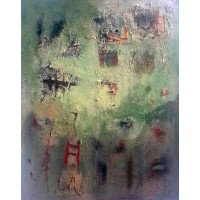
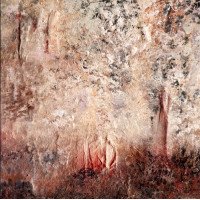
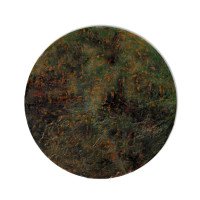
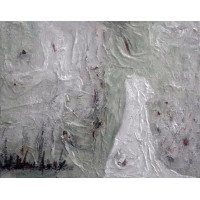
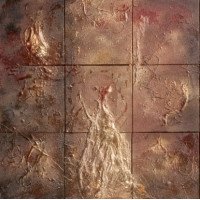
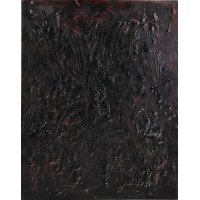
Nur Ataibiş applied multi- undercoat on the canvas but did not sandpaper the surface and did not remove the coats of subconscious from the canvas. Instead of being laden heavily, the canvas got actually lighter. Instead of energy having been transformed into the mass, the mass was transformed into energy; the material intrinsically glowed and brightened the surface. The glazed layers, cracks, relief levels, layers of trees of life on different relief levels on the portals. The construction sand on the cardboard on the linen as had been contributed by Ataibiş to the art of wall-engraving. The walls, in Turkey, which still bore the marks of the plaster which had recently been applied by the plasterer in the process of construction, Cihat Burak’s architecture and plastering. The plaster of canvas made from construction sand and like the walls mildewed, rusted, rejected the plaster. The material for plastering which Nur poured over the canvas used to stick to it and hold on to it, did not flow down the canvas but remained on it. The remains of the sticky plaster were still on the canvas. The script which formed the memory, the script which was engraved on the memory, the script stuck on the canvas, the written record of the subconscious. There still was a wild, deep, spine-chilling howl from time-to-time in the pictures, moreover scribbles, the ones driven into the flames, collapsing buildings, trees being cut, erected ‘stone babas’ and tombstones. Doomsday(s). The paper sculptures which wanted to exhibit themselves and in which some marks were left-- having been carved by acid. It was something as the shiny polish revealed the cuts on the furniture; all craggy, unclean and recorded parts of the canvas came into view, as Chinese makers of furniture sailed across the water to lacquer them coat on top of coat, a storm broke out, the wind blew and the grains of sand stuck on the lacquer. Nur Ataibiş glazed her own history and her state of having been recorded. It was quite an absurd movement: the canvas was a sand screen then -- as the one the construction workers used, Nur Ataibiş was sifting a long long history. An atlas of memory extended from China to Byzantium and from Anatolia to The Bosphorus, the relic which had accumulated in the cultural genetics, the optical subconscious. Streaming were the canvases. The tension which forced them to be framed abolished, they were liberated and kept breathing. How far passing through a brick wall used to be possible.
Zeynep Sayın